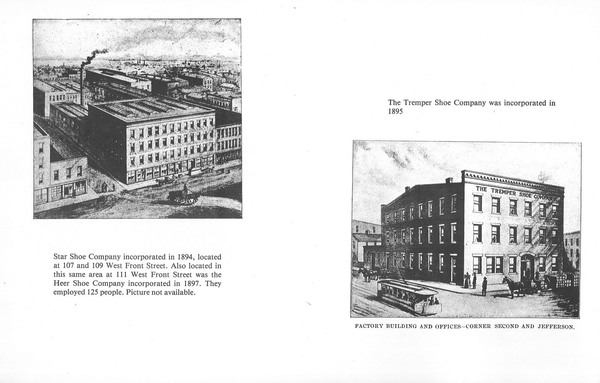
The Star Shoe Company was located at 107 and 109 West Front Street.
The Tremper Shoe Company was located at the corner of Second (2nd) and Jefferson Streets.
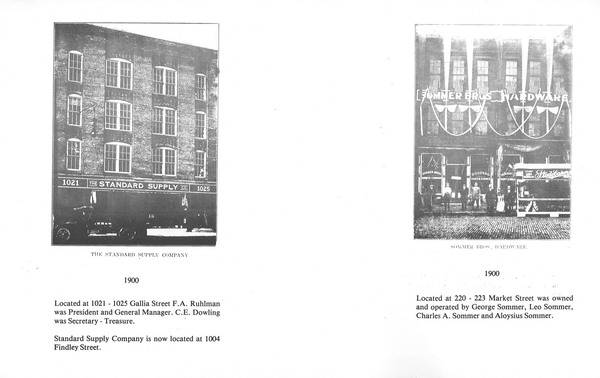
The Standard Supply Company was at 1021-1025 Gallia Street before it moved to 1004 Findlay Street.
The Sommer Brothers Hardware was at 220-223 Market Street.
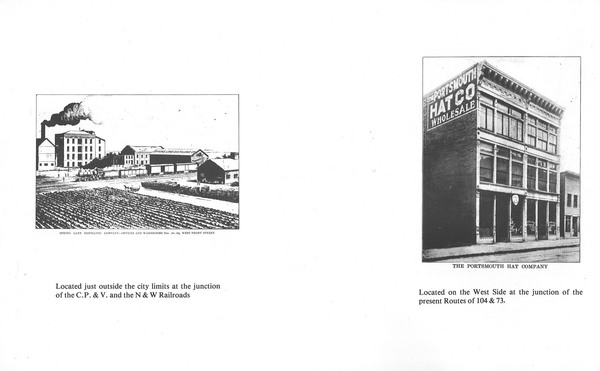
Spring Lane Distilling Company was located at 161-163 West Front Street, just outside the city limits at the junction of the Cincinnati, Portsmouth, & Virginia Railroad and the N & W Railroad. The plant was built in 1888; the president was M. Stanton.
The Portsmouth Hat Company was on the West Side, at the junction of State Routes 104 and 73.
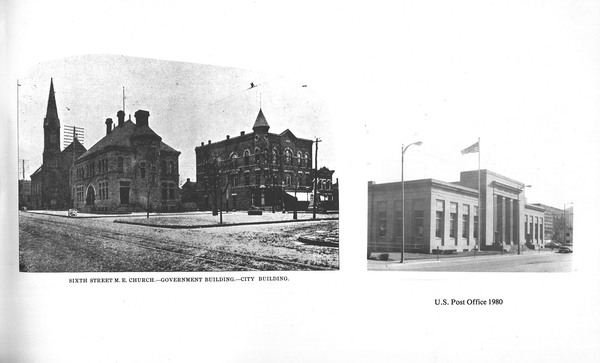
The Sixth (6th) Street Methodist Church was located at Sixth and Chillicothe Streets. The Government Building was the old stone Post Office facing Gallia Square (Esplanade). To the right stood the Portsmouth City Building (Kricker Building). The Coggswell Lion and Fountain are visible in this photo.
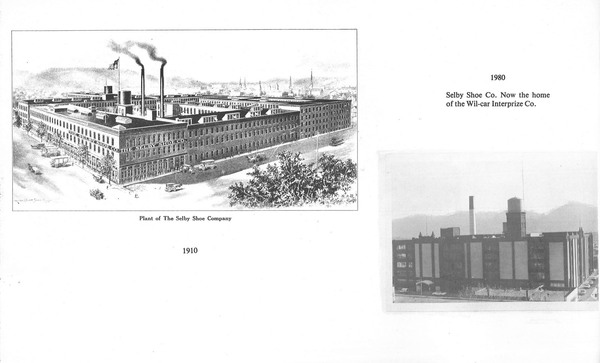
The Plant of the Selby Shoe Company was located at 92-102 East Seventh (7th) Street. The shoe factory closed in 1957, the building had a few other occupants. The Wil-Car (Wilber Carrington) Enterprise Company was in the building at Seventh and Findlay in about 1980. The factory was razed in 1999 for the construction of the new Portsmouth City School campus.
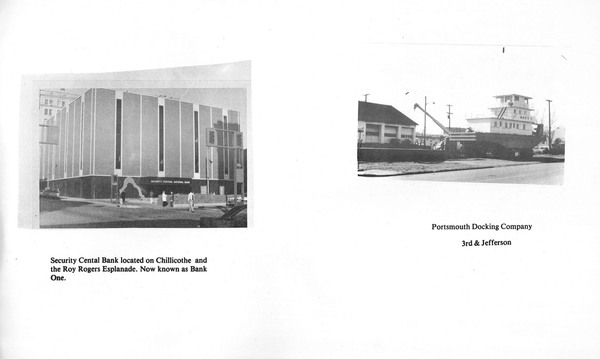
Security Central National Bank moved from Gallia Street to the former Montgomery Ward Department Store building facing the Roy Rogers Esplanade.
The Portsmouth Docking Company was located at 3rd (Third) and Jefferson Streets.
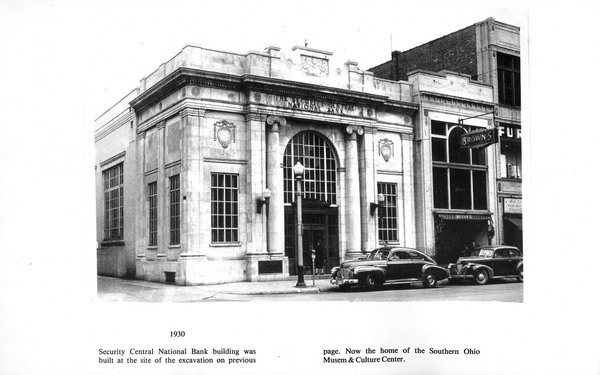
The Security Central National Bank was at 825 Gallia Street. Above the entrance it originally said the "Security Bank". It is now the home of the Southern Ohio Museum and Culture Center on Gallia Steet.
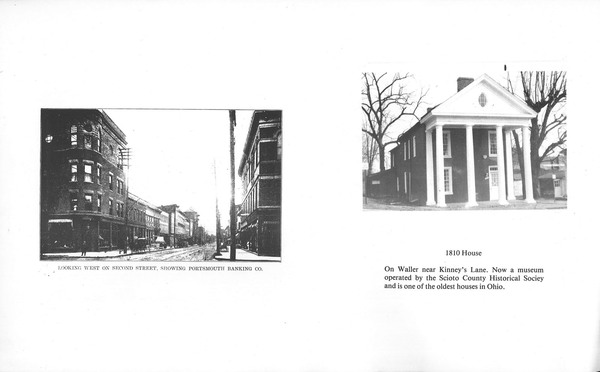
On the left is Second (2nd) Street when the Portsmouth Banking Company was located at Second (2nd) and Court in the Elks Building as it was known in 1898.
On the right is the 1810 House on Waller Street near Kinney's Lane. It was the home of the Aaron Kinney family and is now a museum that is operated by the local Historical Society.
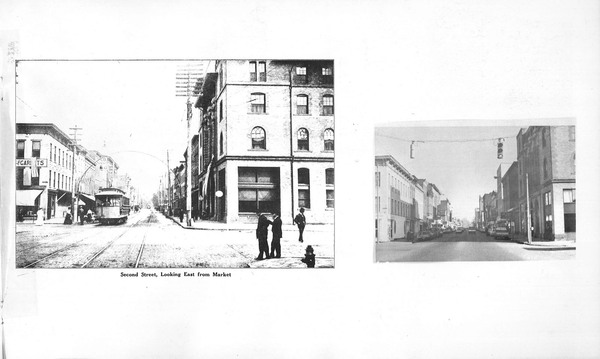
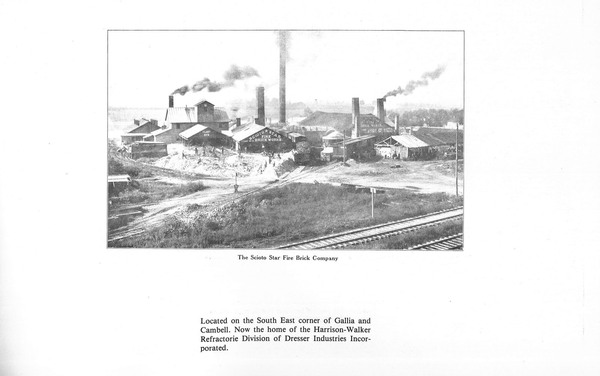
Second (2nd) Street looking east from Market Street with some unidentified individuals and a trolley car on the left. The building at the right in both photographs is the Hotel Washington, built in 1901.
A more modern image of the street is on the right. The Washington is still stands, but now it is part of the Riverview Retirement Center.
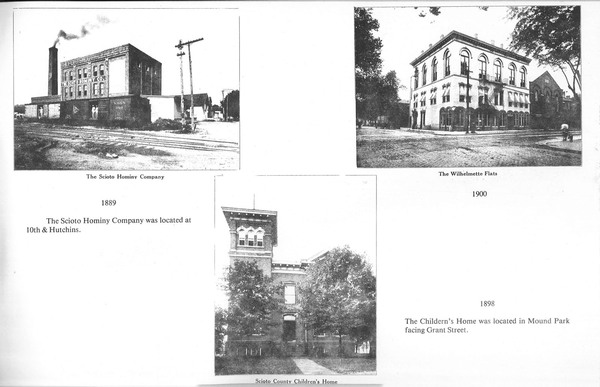
The Scioto Fire Brick Company, incorporated in 1872 with John Peebles as president, was in Sciotoville a few miles up the Ohio River from Portsmouth. This mammoth 13 acre plant, between the river and the railroad, had an almost inexhaustible mine of raw material. It produced Fire Brick, Clay In-walls and Hearths for blast furnaces, tiles of all sizes, Arch, Key and Wedge, Circular and Split Brick from the very best Scioto Clay. --from the Portsmouth Blade Industrial Edition, 1898
The Portsmouth Fire Brick Company was actually located at the corner of Gallia and Campbell, the later site of Harbinson-Walker Refactories.
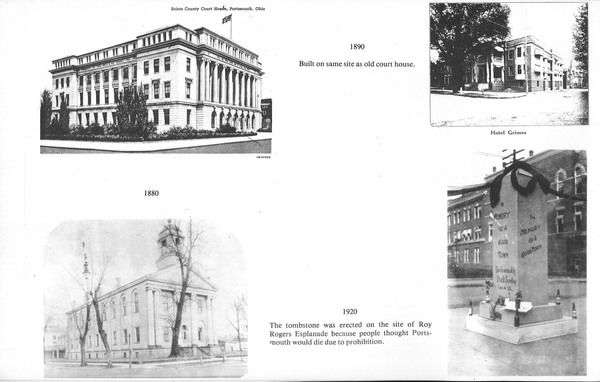
The Scioto Hominy Company was located at Tenth (10th) and Hutchins Streets.
Wilhelmette Flats was on the northeast corner of Fourth (4th) and Court Streets. John Wilhelm built this building and operated the Wilhelm Opera House on the top floor from 1870 until 1899. It was later made into apartments.
In 1876, the Children's Home was opened in Mound Park on Grant Street. It closed in 1921 when Hillcrest Childrens Home opened in Wheelersburg.
The first Scioto County Court House (not shown) was built in 1817 on Market Street. The second, shown lower left on this page, was constructed in 1836 at Sixth (6th) and Court Streets. In about 1926 the third Court House, shown at the top, was erected. The dates printed are not significant to any of the Court Houses.
The fourty-three room Hotel Grimes was built at 902 Second (2nd) Street by H S Grimes. It was razed in 1966 for the expansion of the Portsmouth Branch of Ohio University (Shawnee). In 1920 a tombstone was put up near the Roy Rogers Esplanade because people thought that Portsmouth would die economically as a result of prohibition.