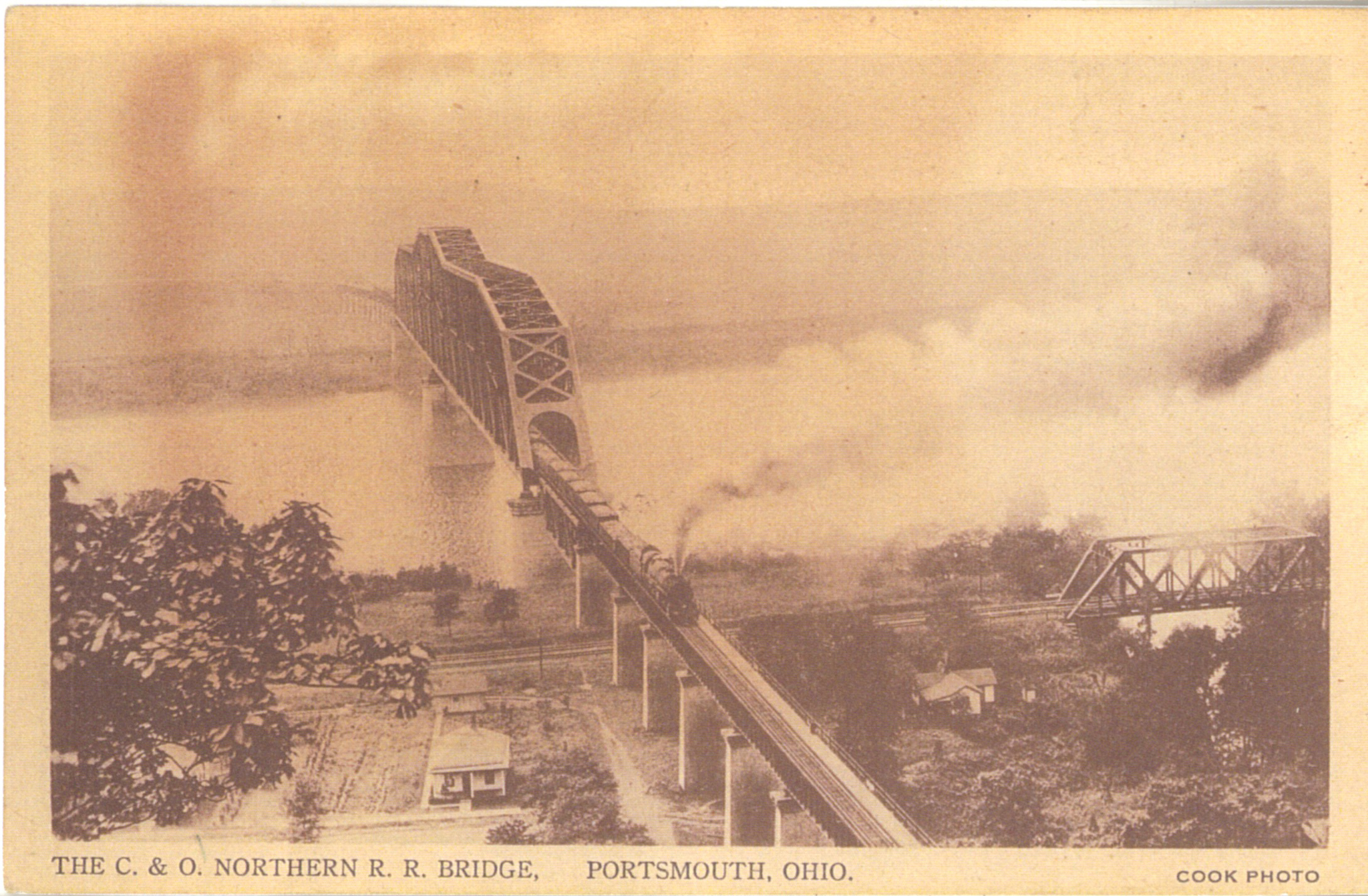
Black and white image of the C & O Railroad Bridge over the Ohio River in Sciotoville. Completed in 1917, the bridge is the longest continuous truss railroad bridge ever built. The distance from Ohio shore to Kentucky shore is 1,600 feet.
Black and white photo image of the Irving Drew Company. The company manufactured women's shoes. The 1906 city directory lists two locations: 107-111 West Front Street and East Tenth (10th) & Hutchins streets. .
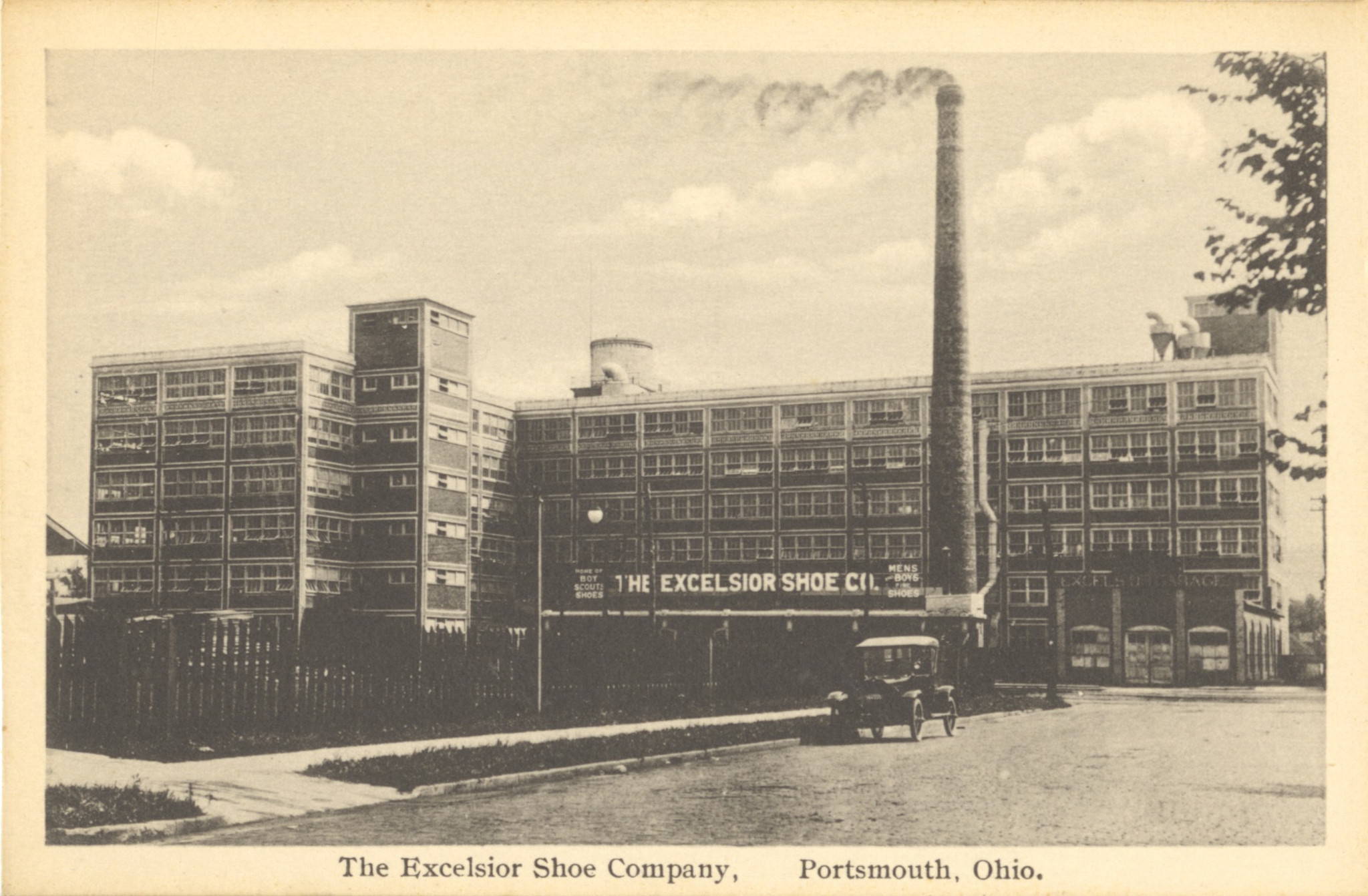
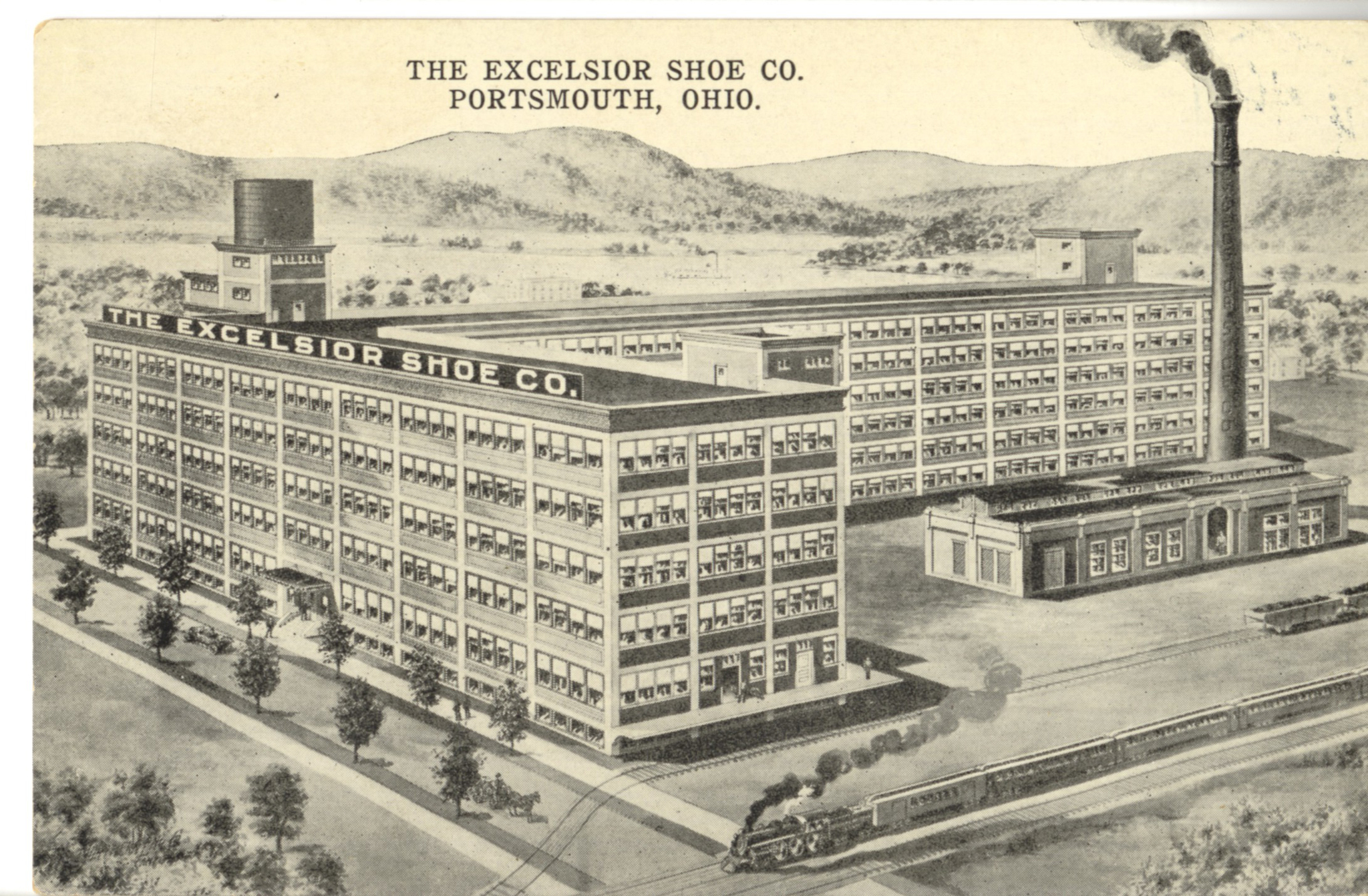
Black and white photo image of the Excelsior Shoe Company located at the southwest corner of Gallia Street and Campbell Avenue. The company was started in 1889, in 1893 it moved to Third (3rd) and Gay Streets and in 1913 this factory was built at Gallia and Campbell. Williams Manufacturing purchased the building in 1935.
Black and white image of the Excelsior Shoe Company located at the southwest corner of Gallia Street and Campbell Avenue. The company began in 1889, moved to Gay and Third (3rd) Streets in 1893 and in 1913 this factory was built at Gallia and Campbell. Williams Manufacturing purchased the building in 1935.
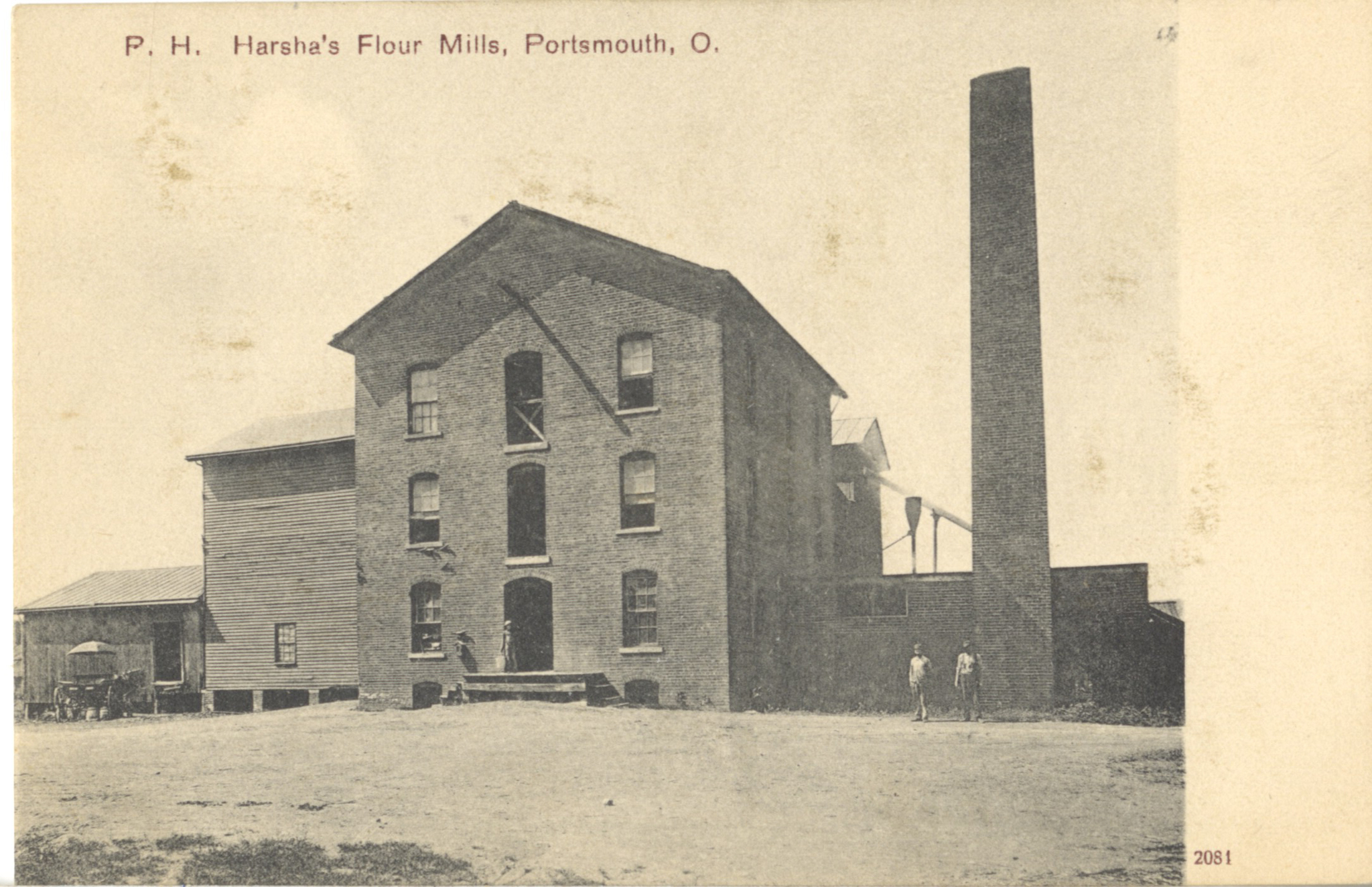
Black and white photo image of flour mill with two men standing in front of the building and one standing in the doorway. The mill was located at 557 east 8th (Eighth) Street.
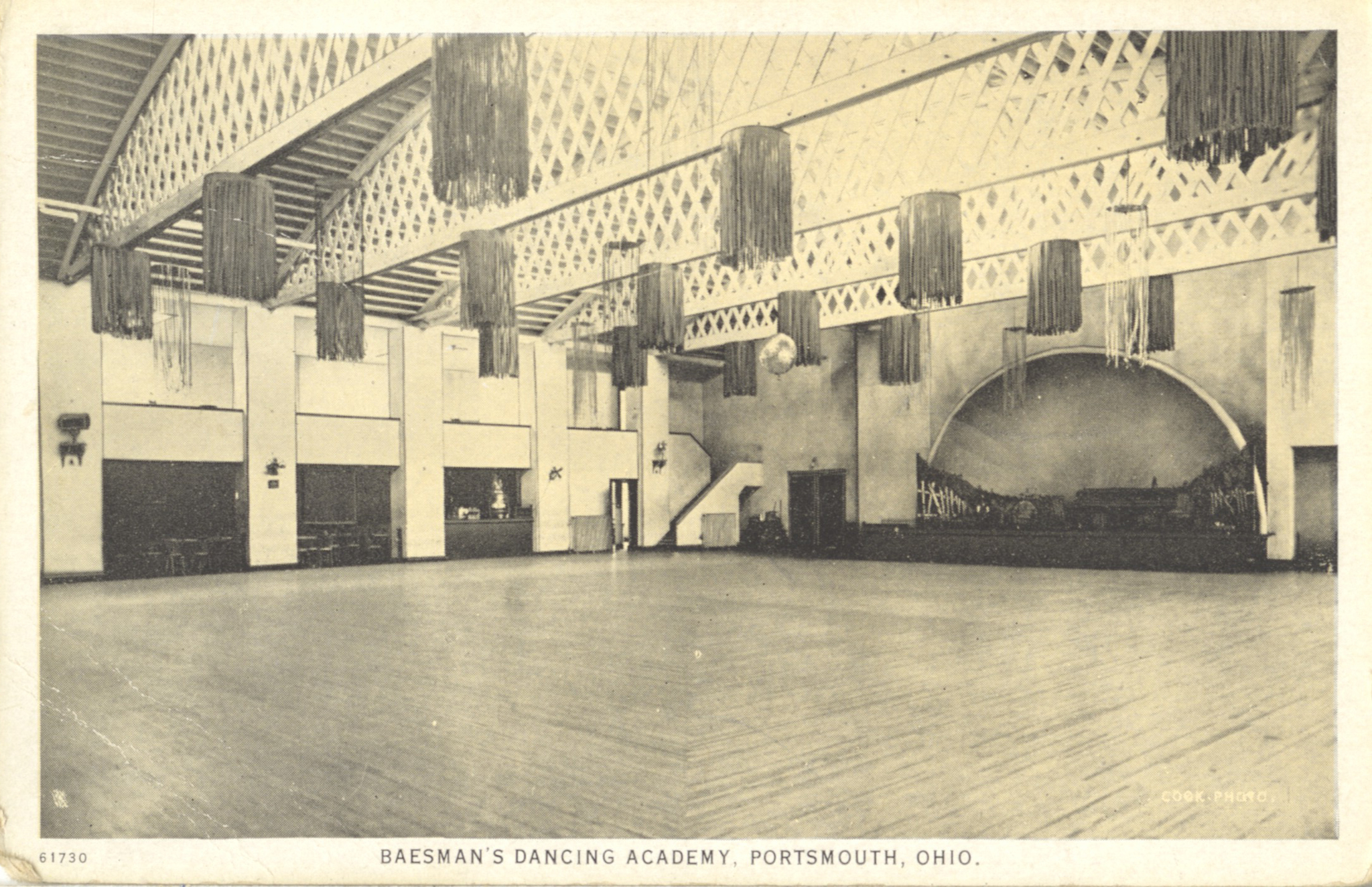
Black and white photo image of interior of Baesman's Dancing Academy, Portsmouth, Ohio. The building was located on Chillicothe Street on the southwest corner of 9th (Ninth). It first appeared in the City Directories in 1924 and was owned and operated by Fred W. Baesman.
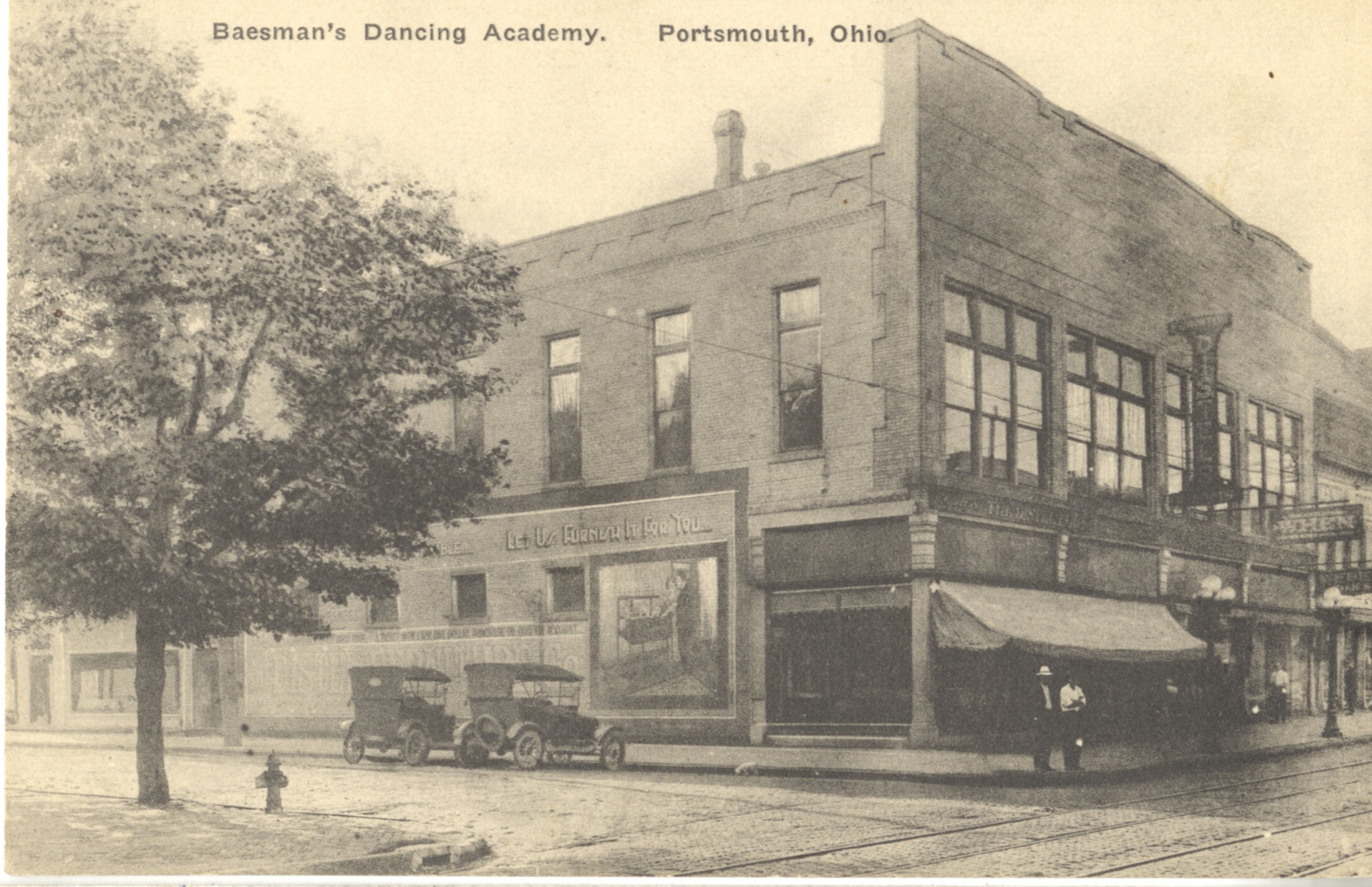
Black and white photo image of a street scene featuring Baesman's Dancing Academy with two automobiles and two men standing in the foreground. The building was located on Chillicothe Street on the southwest corner of (9th) Ninth. It first appeared in the City Directories in 1924 and was owned and operated by Fred W. Baesman.
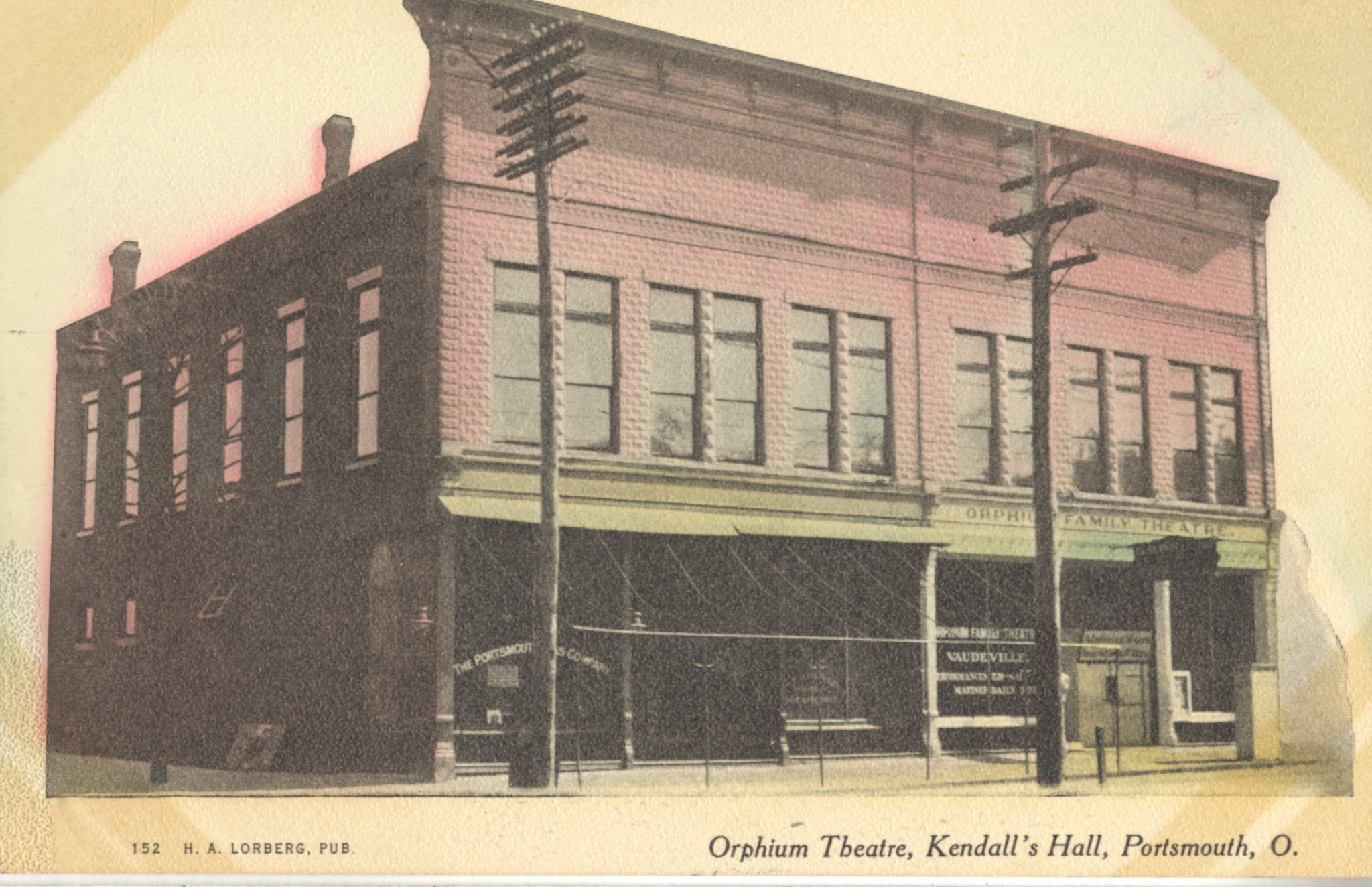
Colorized photo image of Orphium Theatre with electric poles in front. Handwriting on back of postcard states "1908 09, 1912 13, 614 616 Chillicothe." The building was located at 614 Chillicothe Street and was owned by Gus Sun.
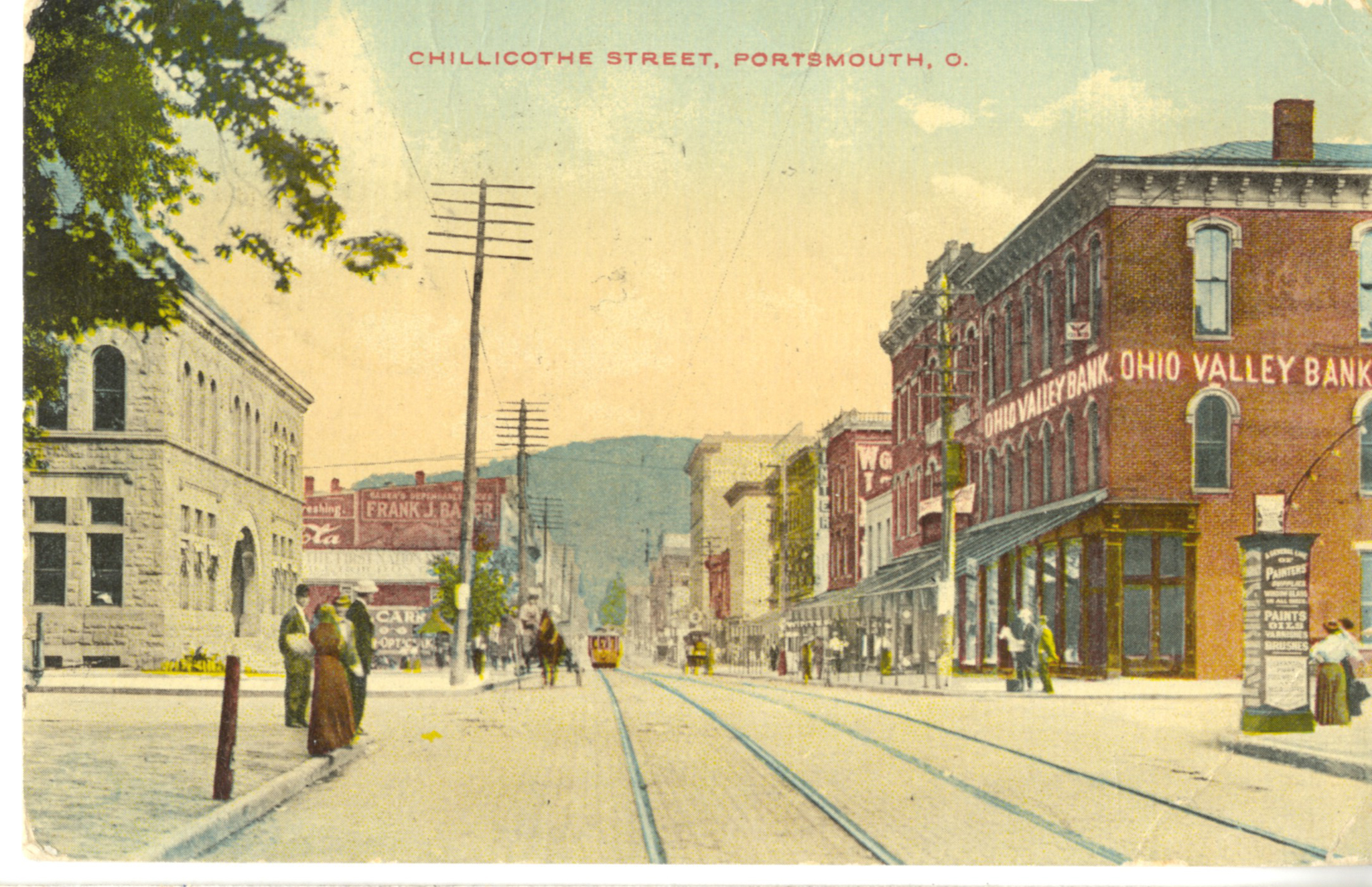
Colorized image of Chillicothe Street in Portsmouth. The Ohio Valley Bank is on the right located at the intersection of 6th (Sixth) and Chillicothe, 519. Then, W. A. Pepper at 517 Chillicothe.
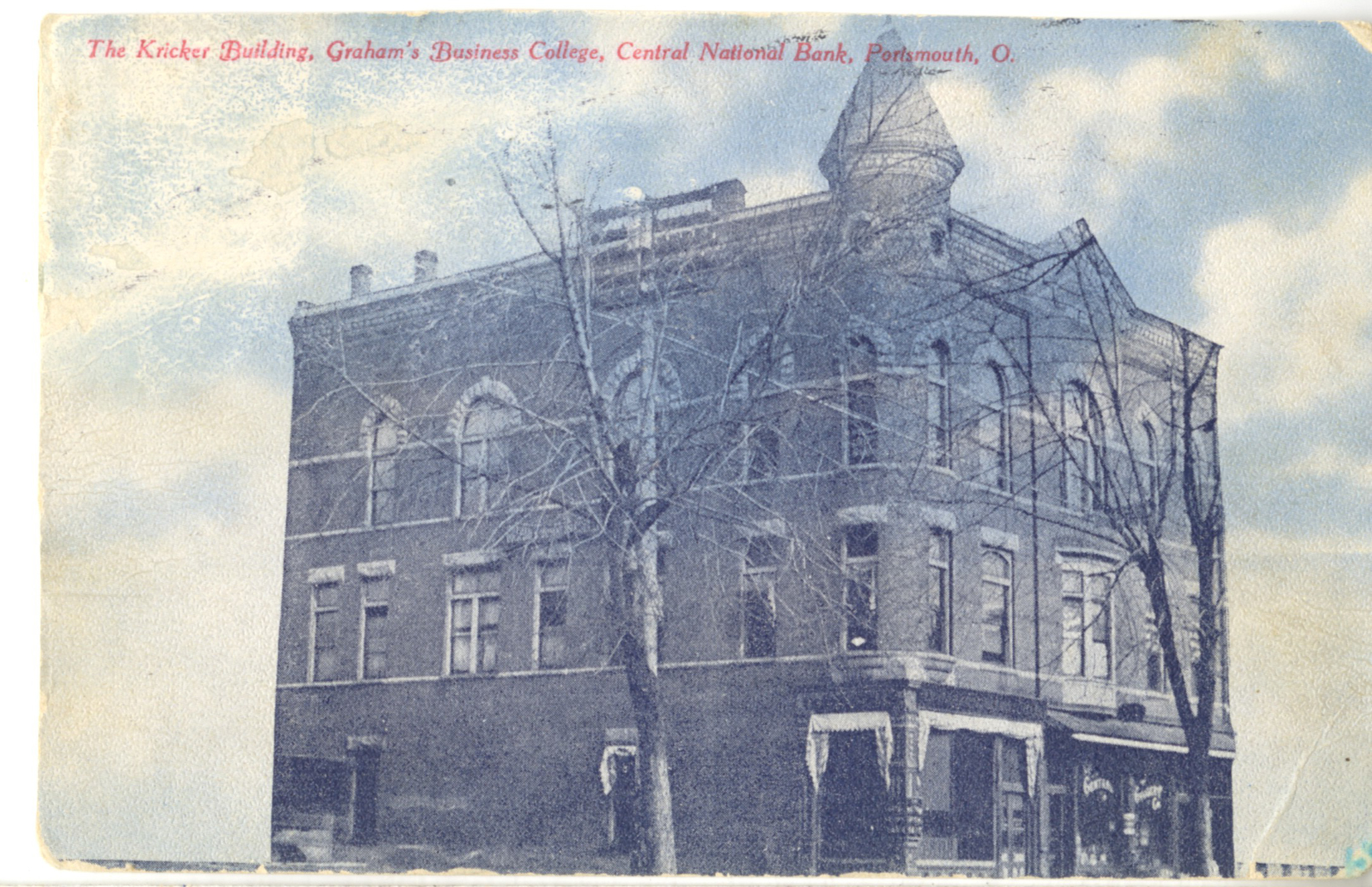
Image of the Kricker Building which held Graham's Business College, Portsmouth city offices, grocery, bank, jeweler, and many other business. It was located at 815 Gallia Street facing Government Square (the Esplanade). Built by George Kricker in 1893, it was also known as the City Building.
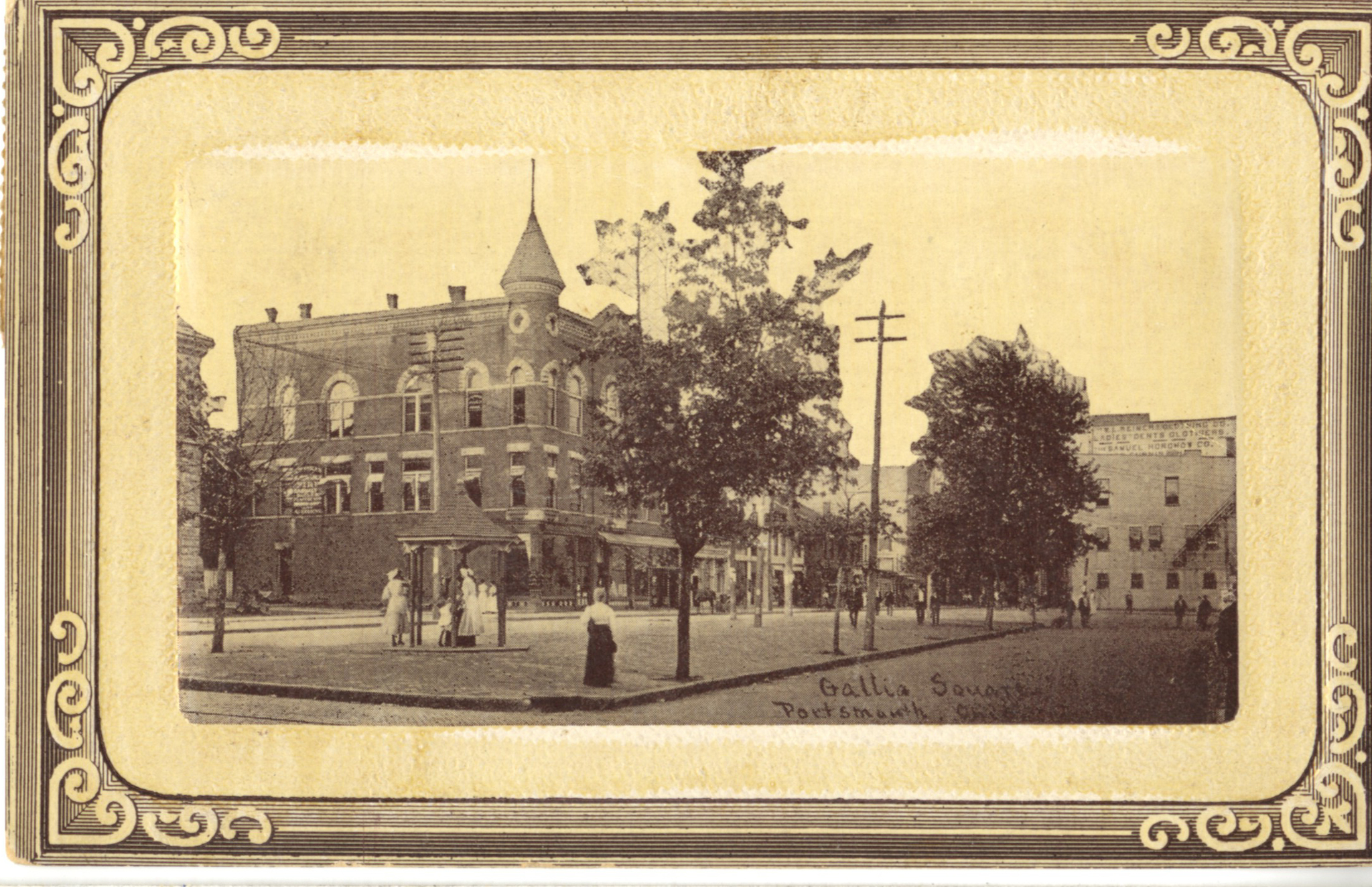
Framed image of Gallia Street in Portsmouth, a cornered view of Government Square (the Gallia Street Esplanade). The Government Building (Kricker Building) is shown facing Gallia Street Esplanade. The Chamber of Commerce, Portsmouth City Offices, a bank, grocery, jeweler, business college, and many other businesses were located in this building built by George Kricker in 1893.
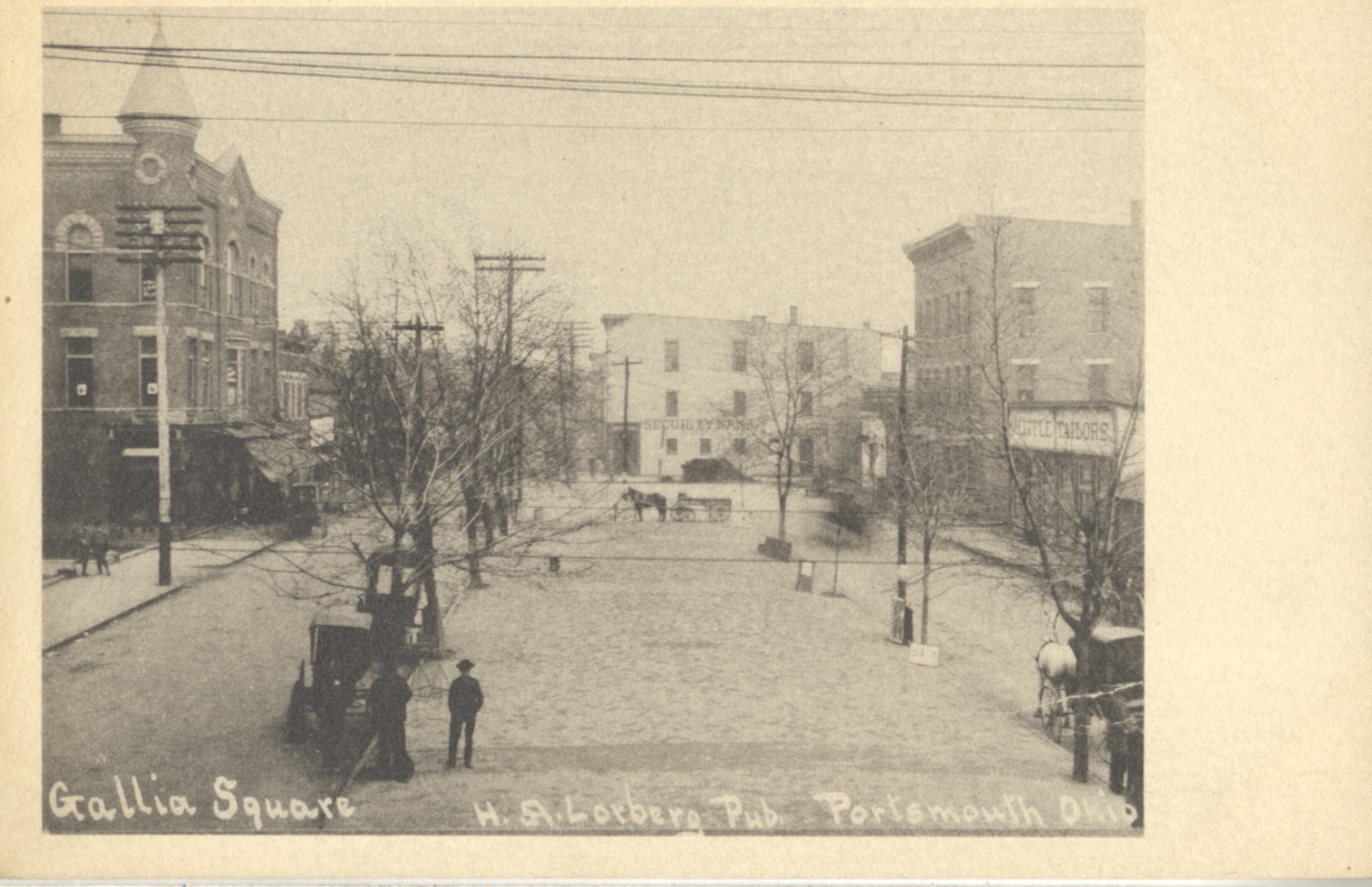
Sepia toned photo image of Gallia Square in Portsmouth. Gallia Square or Government Square was located where Gallia Street meets Chillicothe Street or where the Esplanade is now. The three story brick building at the left is the Kricker Building built by George Kricker in 1893. It held the Portsmouth City Offices, a bank, a grocer, a jeweler, business college and other businesses.