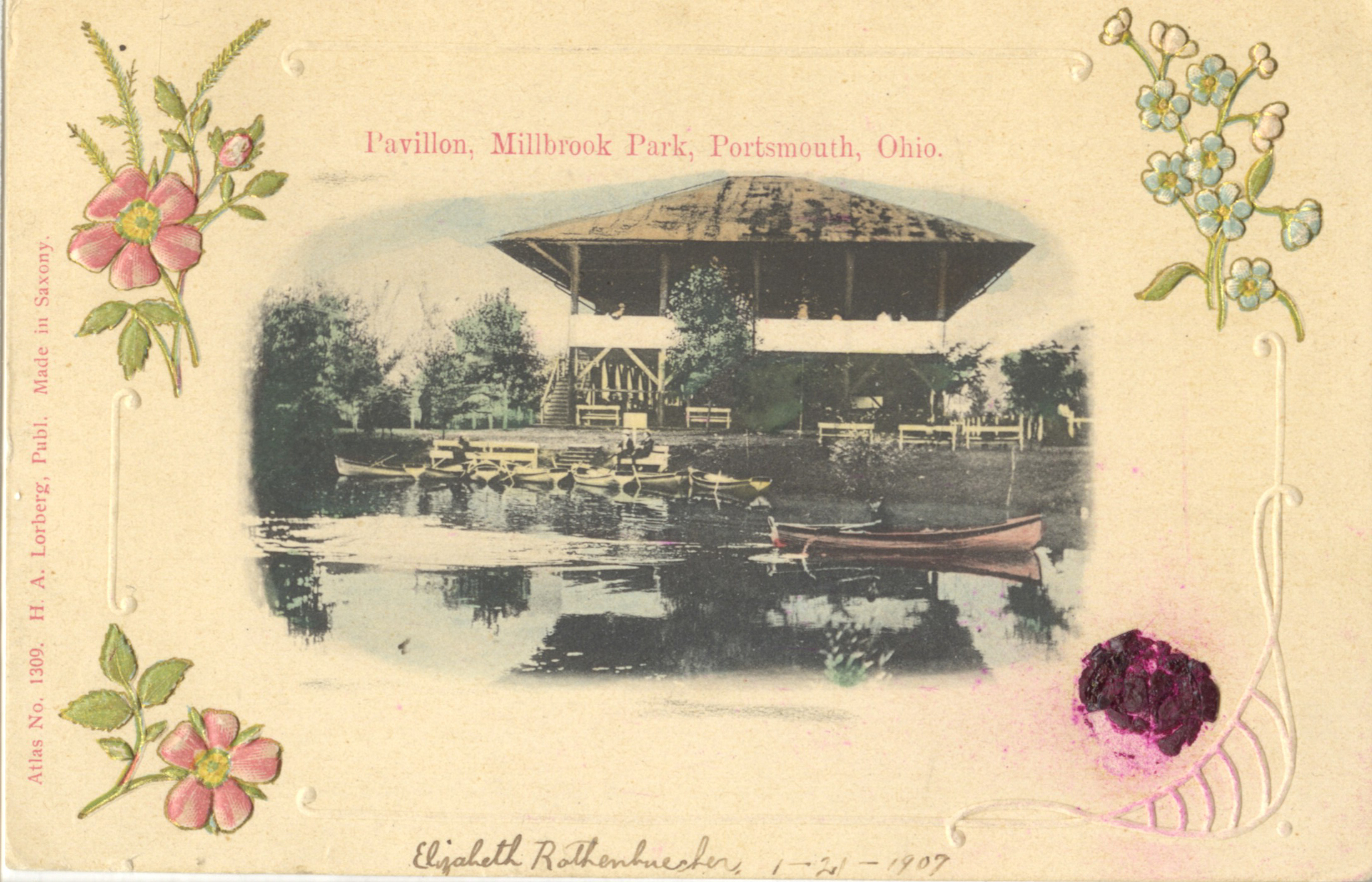
Colorized image of the pavilion in Millbrook Park. The pavilion was built in 1902 from the lumber of the demolished city jail at Front and Washington Streets. The building had bowling alleys, a soda parlor with pool tables, a rifle range, and even a full sized ice skating rink on the second floor.
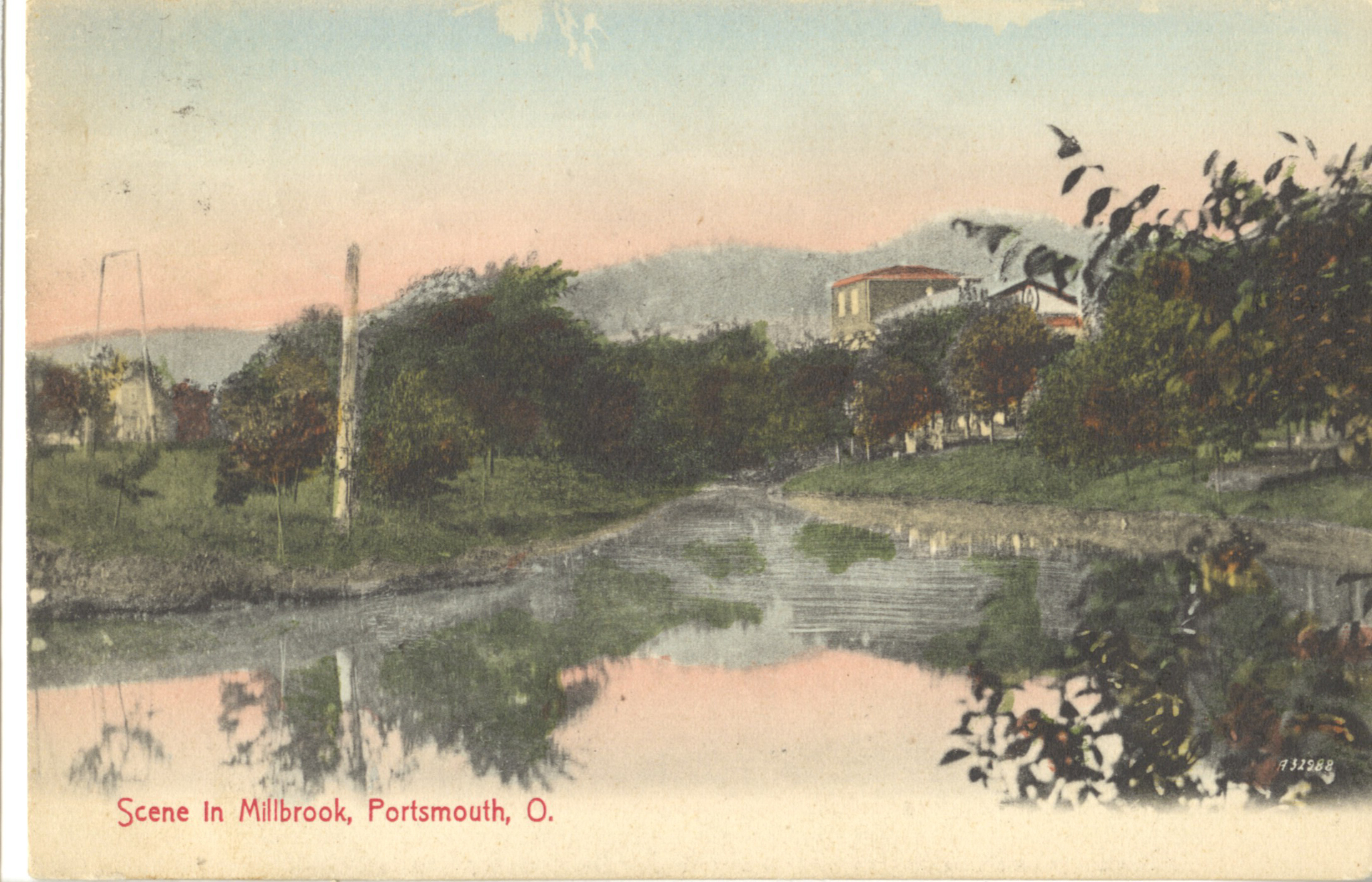
Colorized image of a scene in Millbrook Park including the lake. Levi York began developing Millbrook Park in 1899. It covered over 85 acres. Greatly damaged by the flood, it was totally dismantled by 1935.
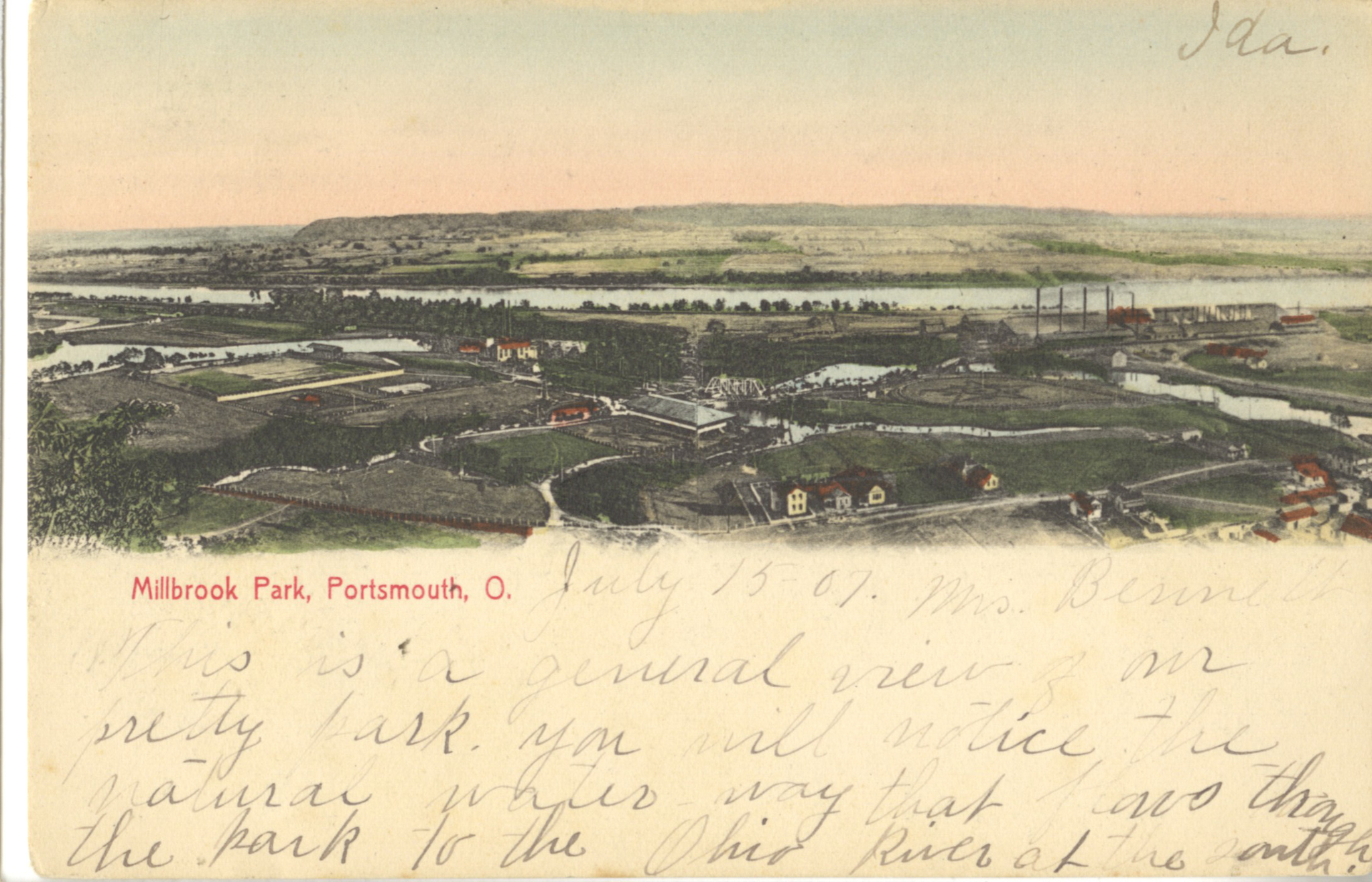
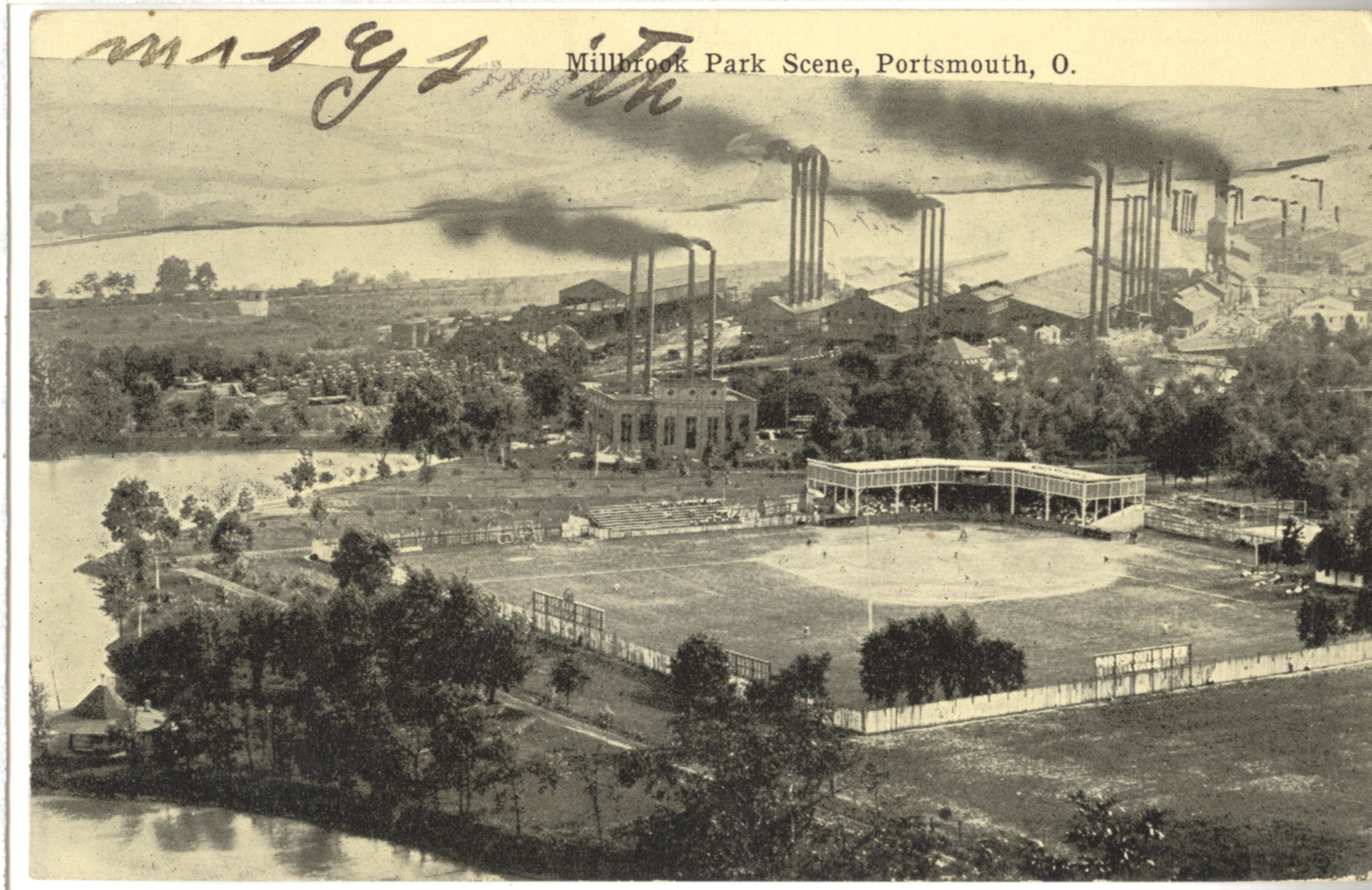
Black and white aerial view of Millbrook Park. Levi York began developing Millbrook Park in 1899. It covered over 85 acres. Greatly damaged by the flood, it was totally dismantled by 1935.
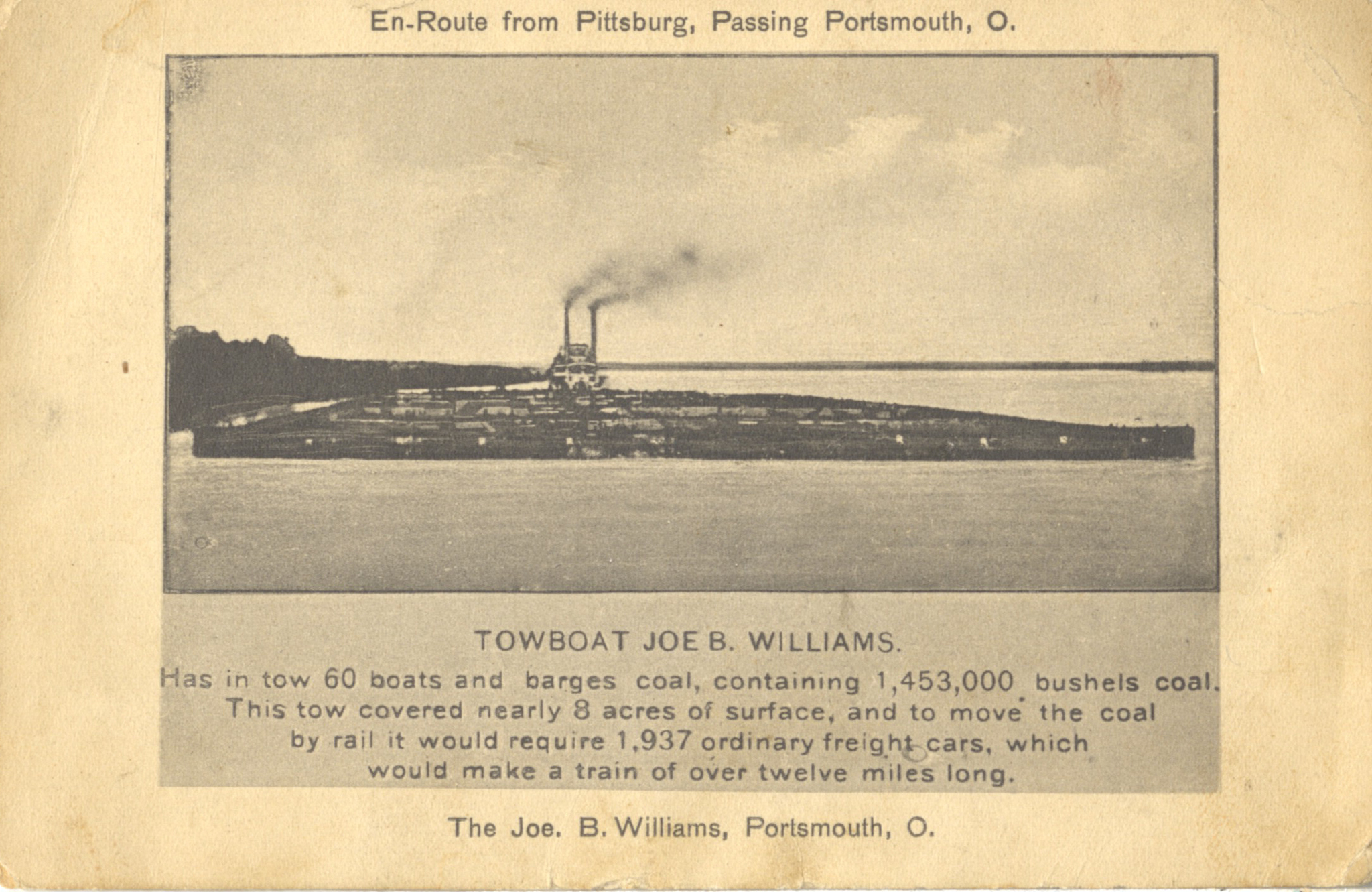
Black and white photo image of the Towboat Joe B. of Portsmouth Williams en route to Pittsburg. The boat has 60 boats in tow. It covered nearly 8 acres across.
Black and white photo image of Millbrook Park scene. Levi York began developing Millbrook Park in 1899. It covered over 85 acres. The park was greatly damaged by the flood, and it was totally dismantled by 1935.
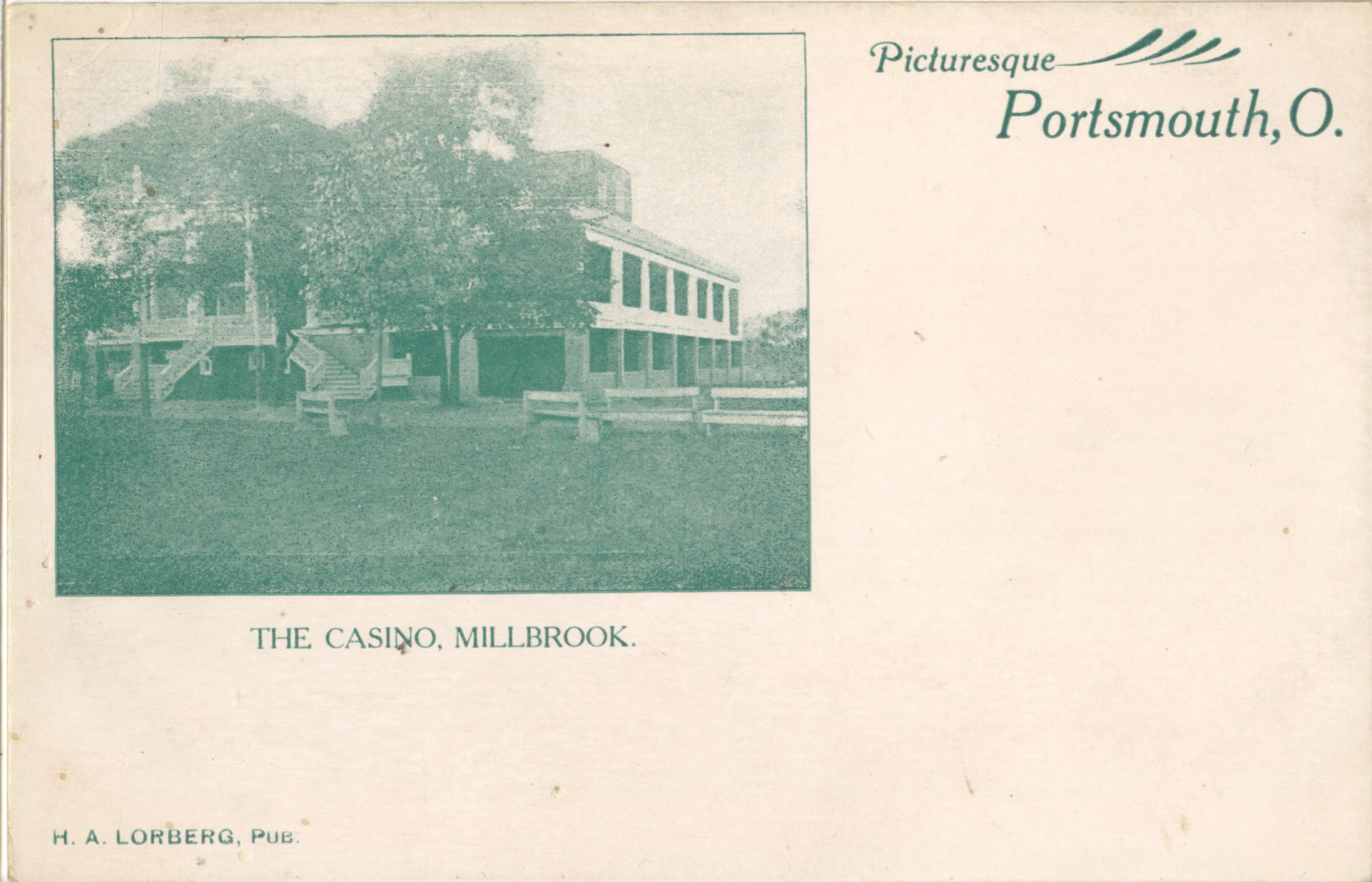
Green tinted photo image of the Casino in Millbrook Park. This building was actually a theater located just inside the park gates at 4200 Rhodes Avenue. It was built in 1905 with a seating capacity of five hundred. The Casino was the prime social gathering place in New Boston in the early 1900's. Plays, films, and concerts were shown all year for entertainment.
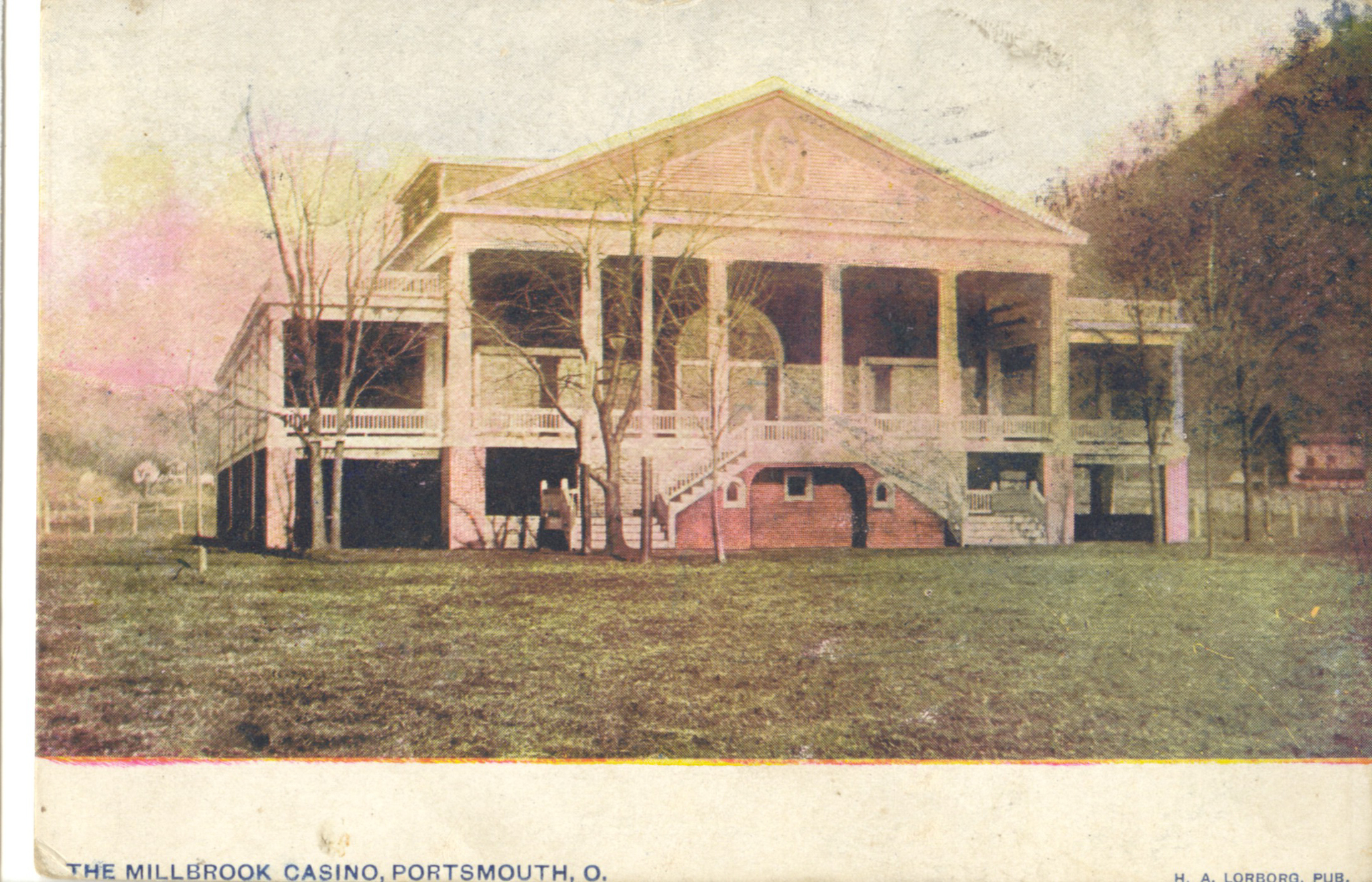
Colorized photo image of the Casino in Millbrook Park.This building was actually a theater located just inside the park gates at 4200 Rhodes Avenue. It was built in 1905 with a seating capacity of five hundred. The Casino was the prime social gathering place in New Boston in the early 1900's. Plays, films, and concerts were shown all year for entertainment.
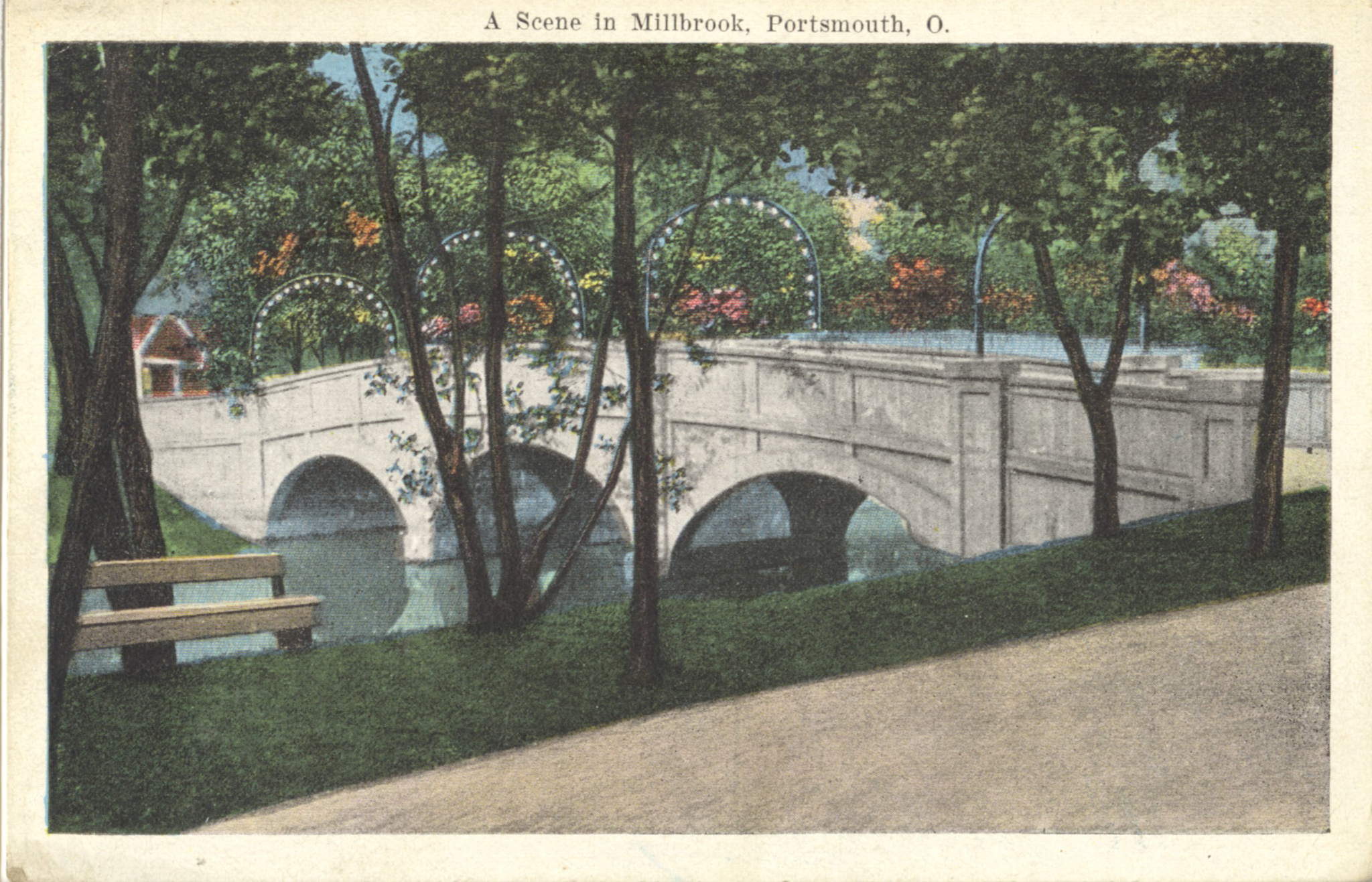
Colorized image of a concrete bridge in Millbrook Park.Levi York began developing Millbrook Park in 1899. It covered over 85 acres. York had walkways traveling throughout the entire park. The concrete bridges were illuminated by electric lights on steel arches that were anchored on concrete piers. They all lead to and from the pavilion, and were illuminated allowing easy access for park-goers.